First: is it the sewer gully or a stormwater pit?
Most Melbourne homes have two separate drainage systems outside, and they overflow for different reasons.
- The overflow relief gully (often just called the gully trap) is part of your sewer. It’s usually a small round grate near an outside wall, close to the bathroom, laundry or kitchen. It’s designed to be the lowest point where sewage can escape, so that when the drain blocks further down, the overflow spills outside instead of coming up through your shower or floor waste. If it overflows when it isn’t raining, especially when someone inside uses water, the sewer drain is blocked somewhere between the gully and the street.
- A stormwater pit takes rain from your roof and paving. It usually has a square grate in the paving or lawn, overflows during or after rain, and the water is muddy rather than smelly. That’s a stormwater drain problem — usually leaves, silt or roots.
What it usually means — most likely first
- Tree roots in an older sewer. Clay and earthenware sewers are jointed every short length, and roots get in at the joints. This is the most common reason we find behind an overflowing gully in established suburbs.
- Wipes, grease and sanitary items caught in the line, often on top of roots or at a bend.
- A failed boundary trap. On older properties the boundary trap near the front boundary can crack, fill with roots or collapse, and the whole property drains badly behind it.
- A broken or collapsed section of pipe that catches everything passing.
- Rainwater getting into the sewer. If garden beds or paving have built up around the gully over the years, rain can run into it during a storm and overload the line. Worth mentioning when you call.
What to do straight away
- Stop using water inside. No flushing, showers, dishwasher or washing machine until it’s cleared. Every litre you use ends up at the gully.
- Keep children and pets away from the overflow, and wear gloves if you need to handle anything it has touched.
- Leave the gully grate uncovered. If it’s spilling, it’s doing its job — releasing the water outside rather than inside the house.
- Clear anything sitting on or over it. Make sure the grate isn’t covered by garden, mulch, pavers or pot plants, so it can keep overflowing outside.
- Don’t hose sewage into a stormwater pit or the gutter. Stormwater isn’t treated before it reaches our creeks and the bay.
- Then call us. We’ll talk you through it and confirm when we can be there.
What not to do
- Don’t pour caustic or chemical drain cleaners into the gully. They won’t clear a blockage in the main line, they can damage pipes, and they make the overflow more dangerous for you and for whoever has to work in it.
- Don’t open sewer inspection openings or the boundary trap shaft. With the line blocked they can be holding sewage under pressure, and it can come out fast.
- Don’t cover, seal or raise the gully to stop it overflowing. That just moves the overflow inside the house.
- Don’t keep using water in the hope it clears itself. It rarely does.
When it’s time to call a plumber
- The gully is overflowing with sewage — call now
- Water is rising in a floor waste, shower or toilet as well
- There’s a sewage smell around the gully or the yard
- It has overflowed before, or drains have been slow or gurgling
- A stormwater pit overflows in ordinary rain, not just a downpour
Sewage coming out of the gully? Stop using water inside and ring us. Call 03 4052 7746 — phones are answered 24/7 — or request a call back and our team will ring you, usually within 30 minutes during business hours.
How Zebra finds and fixes it
Camera first. We run the CCTV camera through the line from an access point while you watch the screen live, and the pipe locator marks exactly where the blockage or damage sits and how deep. That tells us whether it’s roots, a blockage, a failed boundary trap or a broken section, and whose side of the connection point it’s on.
One fixed price, approved before any work starts. You see what we found, we quote one fixed price, and nothing starts until you approve it. The quote is obligation-free.
Least invasive fix first. The chain knocker cuts roots and breaks up the blockage, the hydro jetter flushes the line clean, and the camera goes back in so you can see it flowing again.
The honest bit about jetting: clearing the line is a long-term fix only when the pipe is sound. Where roots have cracked or displaced the pipe, they’ll grow back through the gap — the lasting fix is relining or replacing that section, where suitable, and you’ll see why on screen before you decide. Our workmanship is backed by a lifetime labour warranty.
Whose drain is it?
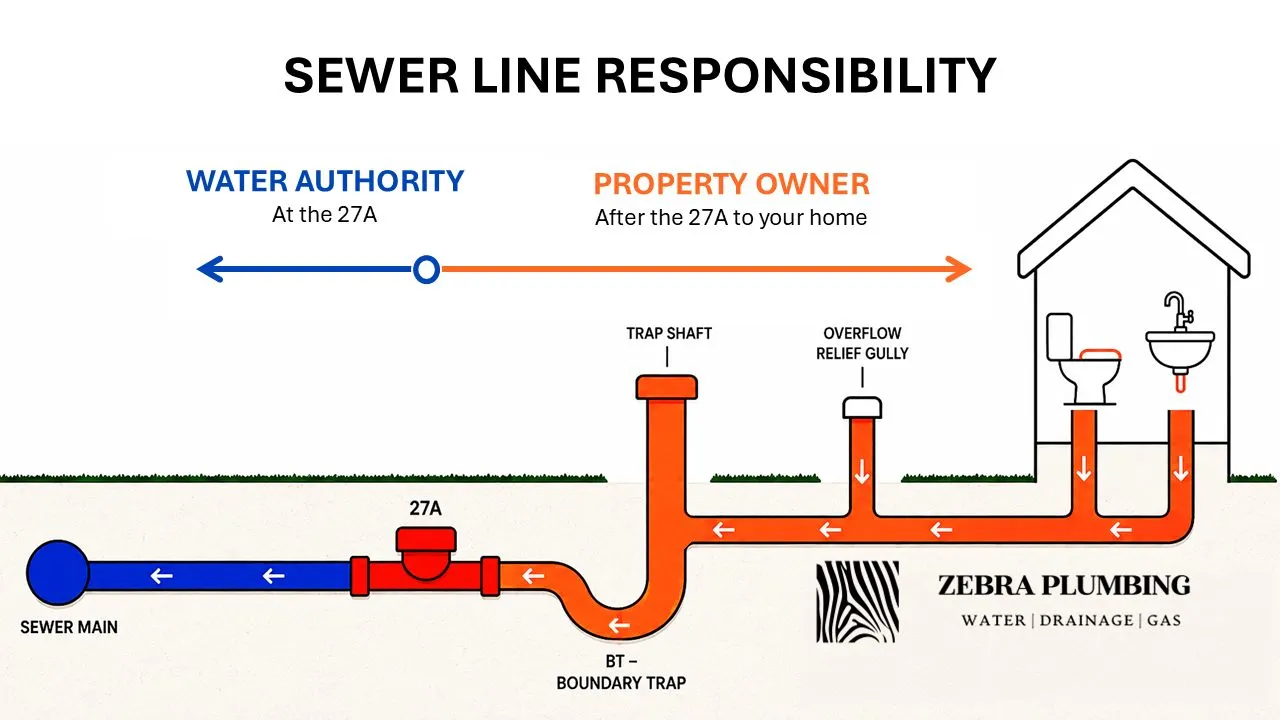
Everything on your side of the connection point is yours to maintain: the pipes under the house and yard, the overflow relief gully, and — in older suburbs — the boundary trap. Your water corporation (Yarra Valley Water, South East Water or Greater Western Water, depending on where you live) owns the sewer main itself, and the council owns the street's stormwater drains. Older and subdivided blocks sometimes share one combined drain across several properties, and a fault in the shared section is usually a shared cost. We camera and locate the fault first, so you know exactly whose side it sits on before anything is quoted — and if it turns out to be on the corporation's side, we'll say so and point you to their faults line rather than charge you for someone else's pipe. One tip worth acting on today: keep your overflow relief gully (the grated drain outside, usually near a side or rear wall) clear and uncovered. It's designed to spill outside instead of through your bathroom floor, and insurers can take a dim view of a blocked or built-over gully after a sewage spill.
Common questions
Why is my gully overflowing when it isn’t raining?
Can I just clean out the gully grate?
Do you come out after hours?
How soon can you come?
More plain-English help in our drain guides.