What a gurgle actually is
Every sink, shower, bath and toilet has a trap — a bend that holds a little water so sewer air can’t come back into the house. In a healthy drain, air moves freely through the pipes and the roof vent and the trap water stays put. A gurgle means air is being dragged through that water instead: either something is narrowing the pipe downstream, or the system can’t draw air the way it was designed to.
What it usually means — most likely first
- Build-up in that fixture’s own waste pipe. Hair and soap scum in showers and basins, grease and food scraps in kitchen sinks. If only one fixture gurgles and it’s also slow, this is the most likely answer.
- A partial blockage further down the line. Wipes, grease, sanitary items or silt caught in the drain several fixtures share. The tell-tale sign is a fixture gurgling when a different one drains — the basin bubbles when the toilet flushes, or the floor waste glugs when the washing machine empties.
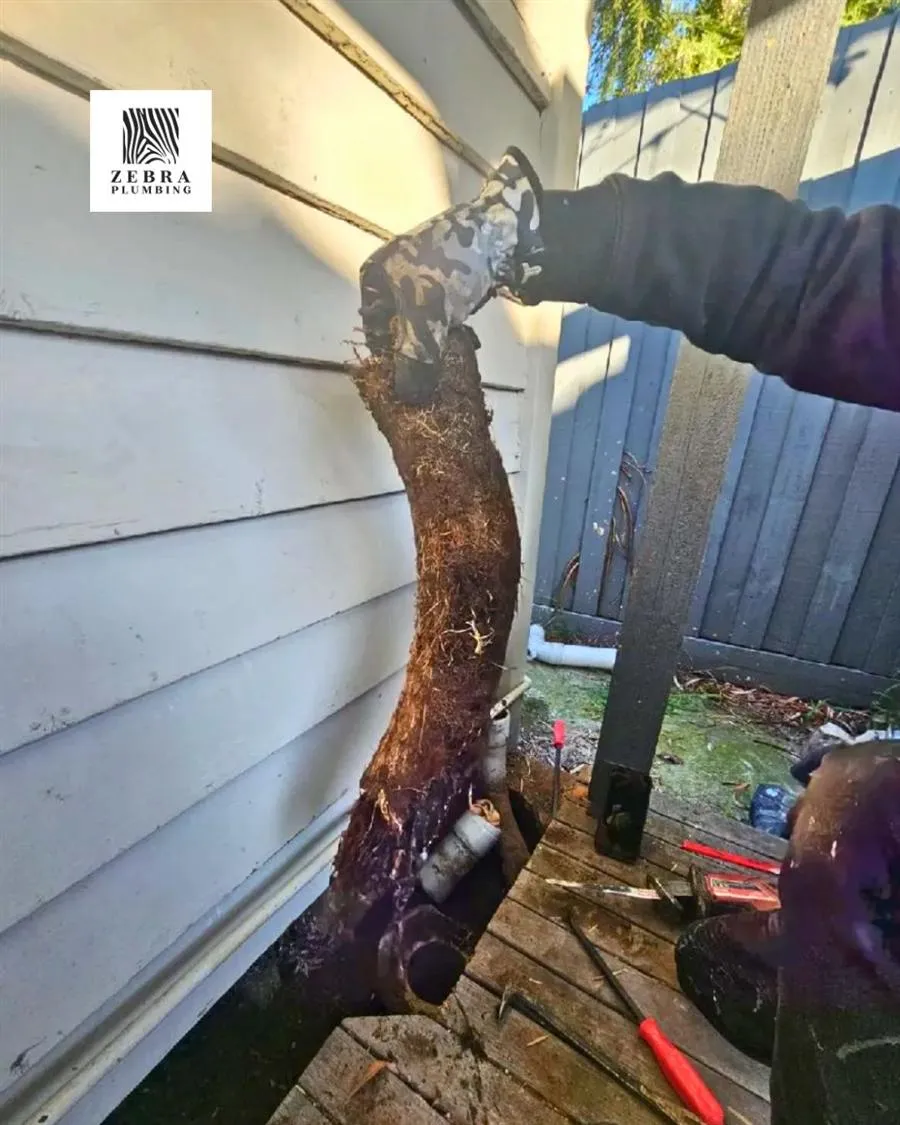
- Tree roots in an older pipe. Plenty of Melbourne homes still drain through clay or earthenware pipe laid in short sections. Roots get in at the joints, thicken each season and catch everything that passes — often the drain that slows down every winter.
- A venting problem. If the vent is blocked or a fixture was added without proper venting, the system pulls air through the traps instead. This tends to show up as gurgling without much slowness.
- A damaged or sagging pipe. A cracked, displaced or dipped section holds water and debris. It’s less common, but it explains the drain that keeps coming back however often it’s cleared.
You can’t tell which one you have from above ground — that’s what the camera is for. But the pattern of the gurgling tells you a lot about where to look.
What you can safely check yourself
- Clean the grate and hair catcher. Lift out the shower grate or basin pop-up and pull out what you can reach, gloves on. For a single slow fixture, this often fixes it.
- Run hot tap water for a minute or two into a slow basin or sink to shift light soap and grease.
- Top up dry floor wastes. A laundry or spare-bathroom floor waste that rarely gets water can dry out, which lets air and smells through. Pour a bucket of water into it.
- Work out whether it’s one fixture or several. Run the shower and listen at the basin and toilet; flush the toilet and listen at the floor waste. One fixture on its own is usually local. Several reacting to each other points to the main drain.
- Find your overflow relief gully — the grated drain outside, usually near a side or rear wall. Make sure it isn’t covered by a garden bed, mulch, pavers or a pot plant, and look at whether water is sitting in it or rising.
- If water starts rising anywhere, stop using water — no flushing, showers or washing machine — until it’s been looked at.
What not to do
- Skip caustic and chemical drain cleaners. They can damage pipes, they’re a real safety risk if they splash or react, they won’t shift roots, and they leave the line hazardous for whoever has to work on it next.
- Don’t open sewer inspection openings or the boundary trap shaft. When a line is blocked they can hold sewage under pressure, and it can come out fast. That’s a job for a licensed plumber.
- Don’t keep flushing to push it through. More water just brings an overflow closer.
- Don’t cover or seal the outside gully to stop a smell. It’s the release valve that keeps an overflow outside the house.
When it’s time to call a plumber
- More than one fixture is gurgling or slow
- A fixture gurgles when another one drains
- Water rises in a floor waste, shower base or the outside gully
- There’s a sewage smell inside or outside the house
- It keeps coming back after you’ve cleared the grate
None of these is a reason to panic, but each one points past the fixture into the drain itself. If water is already coming up through the floor waste or the gully, stop using water and ring us.
Gurgling in more than one place? That’s worth a look before it turns into a backup. Call 03 4052 7746 — phones are answered 24/7 — or request a call back and our team will ring you, usually within 30 minutes during business hours.
How Zebra finds and fixes it
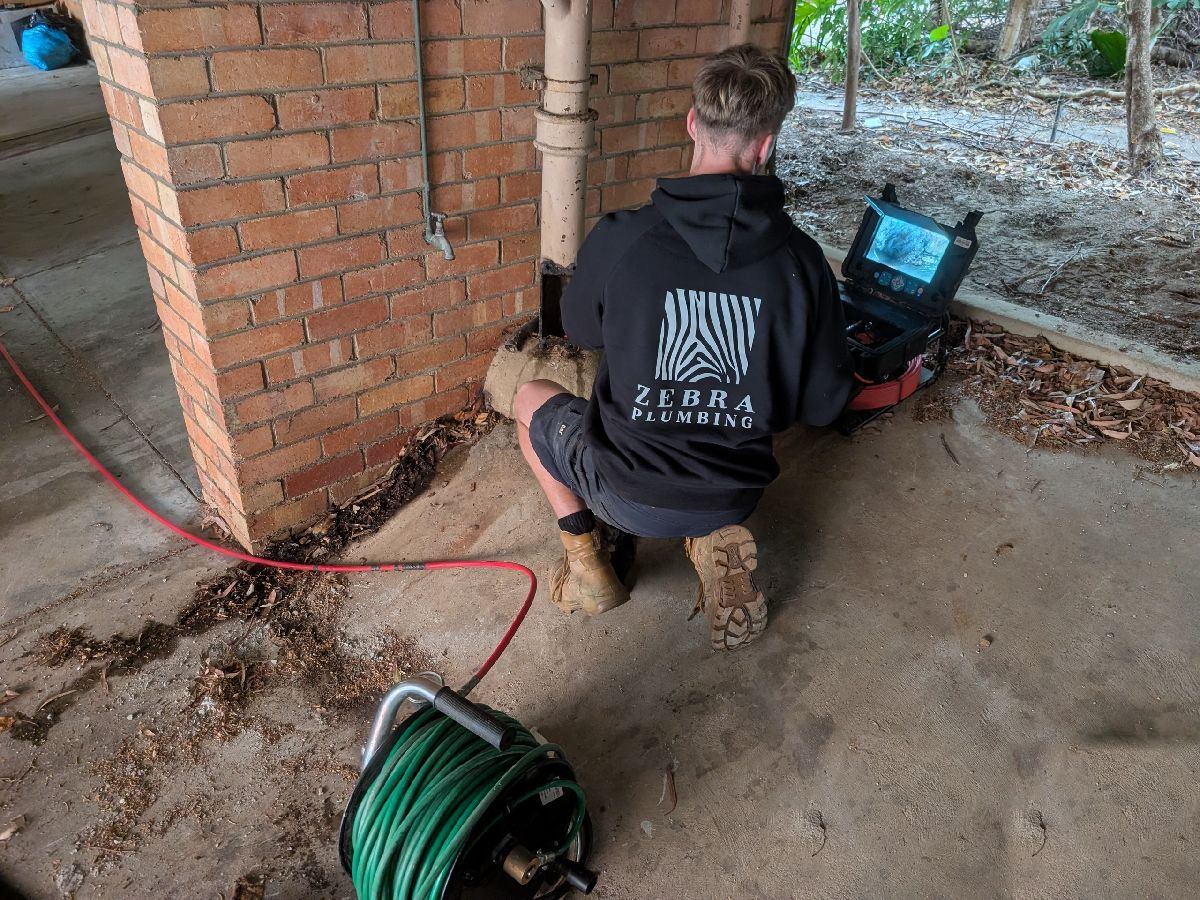
Camera first. We run the CCTV camera down the line while you watch the screen live with the plumber, and the pipe locator pins down exactly where the problem sits and how deep. That tells us whether it’s build-up, a blockage, roots, a vent fault or a damaged section.
One fixed price, approved before any work starts. We quote one fixed price for the fix and nothing starts until you approve it. The quote is obligation-free, and there’s no hourly meter.
Least invasive fix first. A commercial plunger for a blockage close to the fixture. The chain knocker to break roots and hardened build-up off the pipe walls. The hydro jetter to flush the line clean. Then the camera goes back in so you can see the pipe is open. A vent fault gets fixed at the vent.
The honest bit about jetting: a proper jet clean is a long-term fix only when the pipe itself is sound. If the camera shows cracks, displaced joints or a broken section, roots and debris will find their way back in — the lasting fix is relining or replacing that section, where suitable, and you’ll see exactly why on screen before you decide. Our workmanship is backed by a lifetime labour warranty.
More on how we clear drains and tree roots in drains.
Whose drain is it?
Everything on your side of the connection point is yours to maintain: the pipes under the house and yard, the overflow relief gully, and — in older suburbs — the boundary trap. Your water corporation (Yarra Valley Water, South East Water or Greater Western Water, depending on where you live) owns the sewer main itself, and the council owns the street's stormwater drains. Older and subdivided blocks sometimes share one combined drain across several properties, and a fault in the shared section is usually a shared cost. We camera and locate the fault first, so you know exactly whose side it sits on before anything is quoted — and if it turns out to be on the corporation's side, we'll say so and point you to their faults line rather than charge you for someone else's pipe. One tip worth acting on today: keep your overflow relief gully (the grated drain outside, usually near a side or rear wall) clear and uncovered. It's designed to spill outside instead of through your bathroom floor, and insurers can take a dim view of a blocked or built-over gully after a sewage spill.
Common questions
Is a gurgling drain an emergency?
Why does my basin gurgle when I flush the toilet?
How soon can you come?
More plain-English help in our drain guides.