First: don’t flush again
If the water is high in the bowl, another flush can send it over the rim. Take the lid off the cistern and lift the flapper or push the flush valve closed if it’s still running, or turn off the small isolation tap on the wall behind the toilet. Then work out what you’re dealing with.
What it usually means — most likely first
- Too much paper, or the wrong thing, in the pan. Thick paper in one go, wipes, paper towel, sanitary items, cotton buds or a child’s toy caught in the bend of the pan. If the toilet blocked suddenly and nothing else in the house is affected, this is the most likely answer.
- Wipes building up further down. Wipes labelled “flushable” don’t break down the way toilet paper does. They catch at bends and joints and collect everything behind them over weeks.
- A blockage in the drain the toilet shares. If the toilet is slow and the shower, floor waste or outside gully is acting up too, the problem is past the toilet, in the main drain.
- Tree roots in an older line. A toilet that flushes slowly for weeks, then blocks, then flushes slowly again is a classic sign. On one recent Brunswick West job, slow-flushing toilets turned out to be roots in the sewer past the boundary trap — on the water authority’s side of the connection, not the owner’s.
- The pan or cistern itself. Some older or low-flush toilets simply don’t move enough water for the way they’re used. If one toilet blocks often while the drain checks out fine, the answer can be the toilet, not the pipe.
What you can safely try
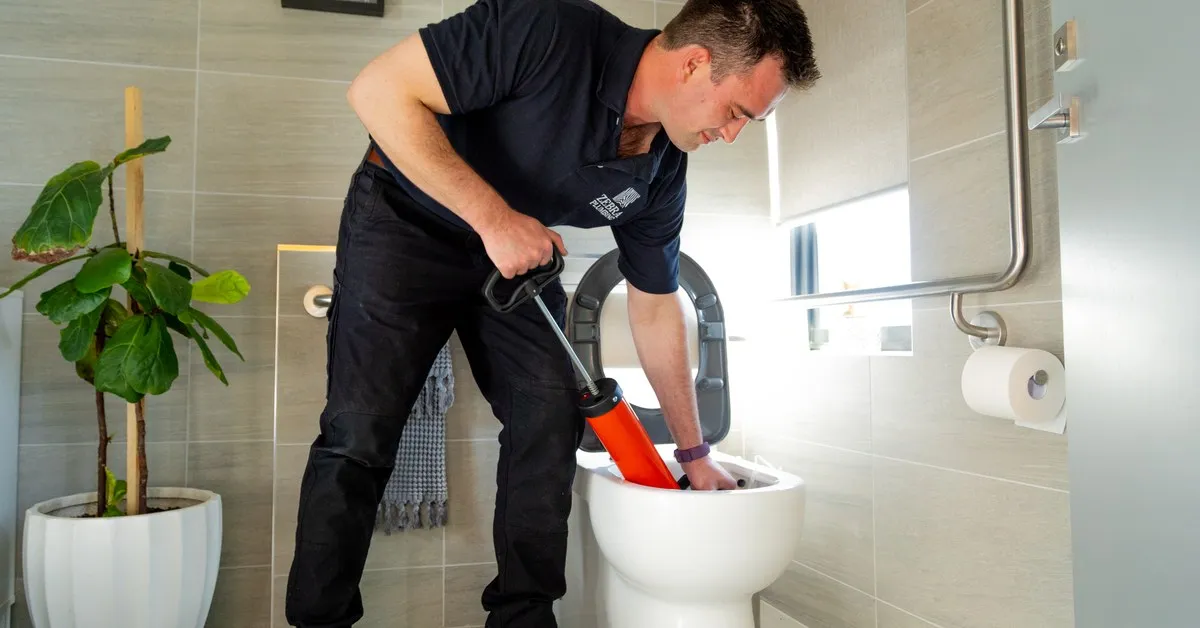
- Use a proper toilet plunger — the kind with a flange that seals into the outlet, not a flat sink plunger. Make sure there’s enough water in the bowl to cover the cup, then push gently first to get the air out, and work it firmly up and down a dozen times.
- Give it time. If the water is draining slowly, let it go down before trying again. A paper blockage often softens and clears on its own within the hour.
- Pour in a bucket of warm tap water from waist height once the level has dropped. Never boiling — it can crack a ceramic pan.
- Check the rest of the house. Run the basin and the shower and watch the floor waste. If anything else gurgles or rises, stop — it’s the drain, and plunging won’t reach it.
- Look at your outside gully. If water is sitting in it or overflowing, the blockage is in the main drain. Stop using water inside.
What not to do
- Don’t keep flushing to push it through. More water just brings an overflow closer.
- Don’t pour in caustic or chemical drain cleaners. They rarely shift a paper or wipe blockage, they can damage the pan seal and older pipes, and they can splash back at whoever plunges or clears it next.
- Don’t push wire or coat hangers into the pan. They scratch the glaze and can wedge a blockage tighter.
- Don’t open sewer inspection openings outside to look for the problem. With the line blocked, they can hold sewage under pressure.
When it’s time to call a plumber
- Plunging hasn’t cleared it, or it clears and blocks again within days
- Other fixtures are gurgling, slow or rising when you flush
- The outside gully is overflowing
- Something solid has gone down, like a toy, phone or air freshener
- It’s your only toilet and it’s out of action — phones are answered 24/7
Plunged it and it’s still blocked? It’s probably further in than a plunger can reach. Call 03 4052 7746 — phones are answered 24/7 — or request a call back and our team will ring you, usually within 30 minutes during business hours.
How Zebra finds and fixes it
Pan first, drain second. We start at the toilet with a commercial toilet pump, which builds far more pressure than a household plunger. If the blockage is further along, the drain machine or hydro jetter goes in from the nearest access point.
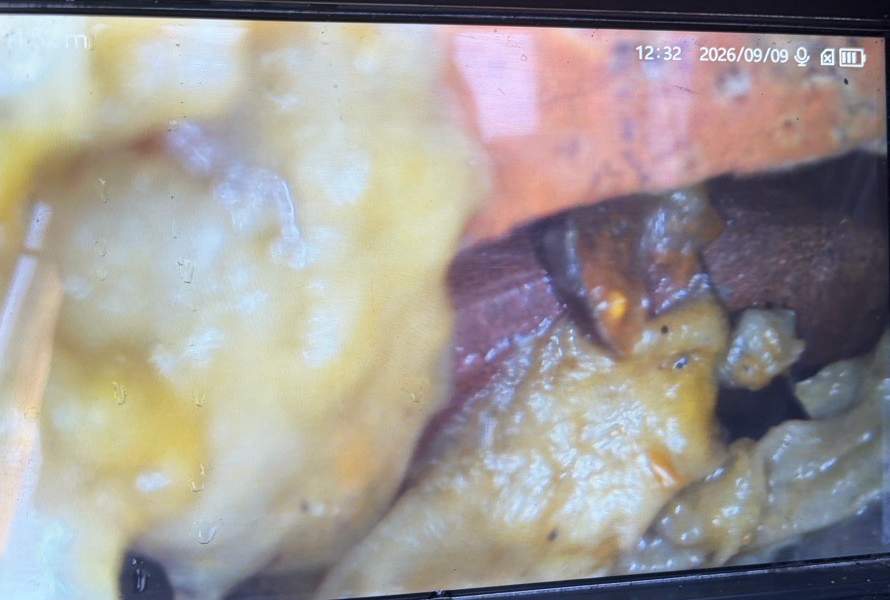
Camera when it keeps coming back. A toilet that blocks repeatedly gets the CCTV camera, and you watch the screen with the plumber. That shows whether it’s wipes building up, roots, a dip in the pipe, or the toilet itself.
One fixed price, approved before any work starts. We quote one fixed price for the fix and nothing starts until you approve it. The quote is obligation-free, and there’s no hourly meter.
The honest bit: if the camera shows the drain is fine and the toilet itself is the problem, we’ll tell you that rather than keep clearing it. Our workmanship is backed by a lifetime labour warranty. More on our blocked toilet service.
Whose drain is it?
Everything on your side of the connection point is yours to maintain: the pipes under the house and yard, the overflow relief gully, and — in older suburbs — the boundary trap. Your water corporation (Yarra Valley Water, South East Water or Greater Western Water, depending on where you live) owns the sewer main itself, and the council owns the street's stormwater drains. Older and subdivided blocks sometimes share one combined drain across several properties, and a fault in the shared section is usually a shared cost. We camera and locate the fault first, so you know exactly whose side it sits on before anything is quoted — and if it turns out to be on the corporation's side, we'll say so and point you to their faults line rather than charge you for someone else's pipe. One tip worth acting on today: keep your overflow relief gully (the grated drain outside, usually near a side or rear wall) clear and uncovered. It's designed to spill outside instead of through your bathroom floor, and insurers can take a dim view of a blocked or built-over gully after a sewage spill.
Common questions
Are flushable wipes OK to flush?
Why does my toilet flush slowly but not block completely?
Is it my toilet or the main drain?
How soon can you come?
More plain-English help in our drain guides.